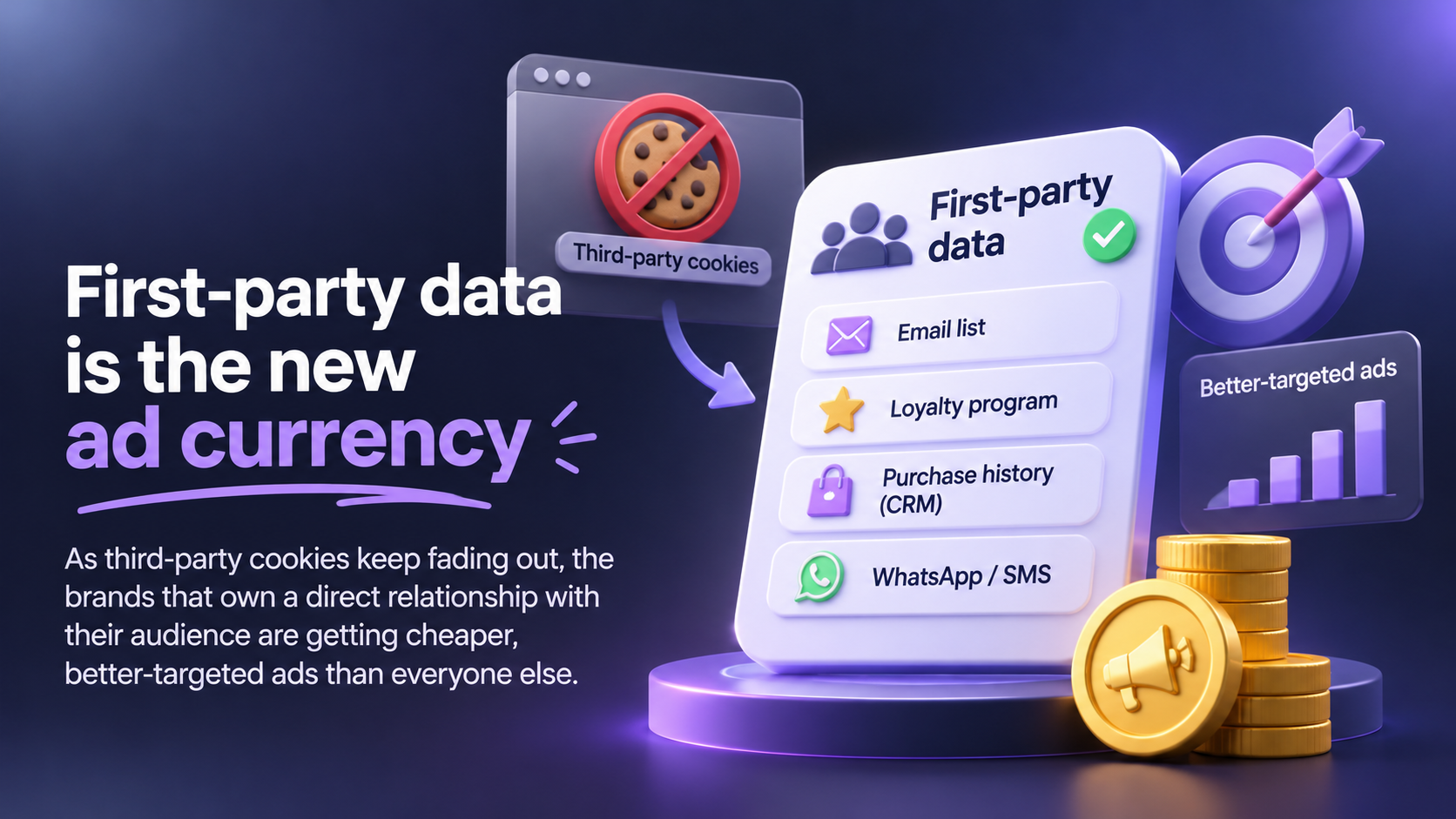
For years, advertising ran on data that brands never actually owned: cookies tracked people across the web, and platforms used that trail to target ads on a brand's behalf. That system is being dismantled piece by piece — browsers restricting trackers, platforms limiting cross-app data, regulation tightening what can be collected without clear consent. The targeting that used to be free and automatic now has to be earned.
The brands adjusting fastest aren't the ones with the biggest ad budgets. They're the ones that already had a direct line to their customers: an email list people actually opted into, a loyalty program, a CRM with real purchase history, a WhatsApp or SMS channel people replied to. That's first-party data — information a business collects directly, with permission, rather than renting someone else's.
Why it performs better, not just safer
First-party data isn't just a compliance workaround. Lookalike audiences built from a brand's own customer list consistently outperform broad interest-based targeting, because the platform is matching against people who already behaved like a real buyer, not people who merely clicked something similar once. Retargeting someone who joined a mailing list converts differently than retargeting someone who viewed a product once and left.
It also compounds. A customer list grows every month a business is open; a reliance on third-party signals doesn't build anything — it just rents access that can be restricted again at any point, as it already has been repeatedly over the past few years.
Where to start, practically
The brands behind on this usually aren't missing the technology — they're missing the habit of asking for the data in the first place. A newsletter signup worth having, a loyalty program with a real reason to join, a post-purchase flow that asks a genuine question instead of just a receipt — these are the unglamorous mechanisms that build a list worth advertising to later.
None of this replaces paid media. It changes what paid media is built on: instead of renting someone else's audience data and hoping it still works next quarter, a business is advertising against something it owns, that gets more valuable the longer it runs.